How to Improve Website Ranking on Google?
Improving your website ranking on Google is essential for increasing online visibility and attracting more visitors. To achieve a higher website ranking, focus on keyword research, high-quality content, on-page SEO, and building relevant backlinks. Make sure your website is mobile-friendly, loads quickly, and provides a good user experience. Regularly update your content and use relevant keywords naturally to improve search engine performance. With the right SEO strategies, you can improve your website ranking and grow your online presence.
What is Website Ranking?
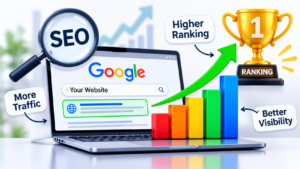
Website ranking refers to the position of a website in Google’s search engine results pages (SERPs) for a particular keyword or search query. A higher website ranking means your website appears closer to the top of Google search results, making it easier for users to find your content. Good website ranking helps increase organic traffic, improve online visibility, and attract potential customers.
Tips to Improve Website Ranking on Google:
1. Keyword Research: The Foundation of SEO
Keyword research is an important step to improve your website ranking on Google. It helps you find the right keywords that people search for online. By using relevant keywords naturally in your content, you can attract more visitors and improve your website’s visibility in search engine results.
2. Create High-Quality and SEO-Friendly Content
High-quality content plays an important role in improving your website ranking on Google. Create informative, original, and engaging content that answers users’ questions. Use relevant keywords naturally and provide valuable information to keep visitors interested in your website.
3. Optimize Your On-Page SEO
On-page SEO helps Google understand your website content more effectively. Optimize your title tags, meta descriptions, headings, URLs, and image alt text with relevant keywords. Proper on-page SEO can improve your website ranking and make your pages more search-engine friendly.
4. Improve Website Loading Speed
Website loading speed is an important factor for providing a better user experience. A slow website can increase bounce rates and affect your search performance. Optimize images, use reliable hosting, and reduce unnecessary scripts to improve website speed and support better website ranking on Google.
5. Make Your Website Mobile-Friendly
A mobile-friendly website is essential because many users browse the internet using smartphones. Make sure your website adjusts properly to different screen sizes and offers easy navigation. A responsive website improves user experience and helps support better website ranking in Google search results.
6. Build High-Quality Backlinks
Backlinks are links from other websites that point to your website. They can help improve your website’s authority and credibility when they come from relevant and trustworthy sources. Focus on creating valuable content and building natural backlinks to strengthen your website ranking on Google.
7. Use Internal Linking Strategically
nternal linking means connecting one page of your website to another relevant page. It helps visitors discover more content and allows search engines to understand your website structure. Using relevant internal links can improve navigation, distribute link value, and support better website ranking.
8. Optimize Images for SEO
Image optimization helps improve website performance and search visibility. Use descriptive image file names, add relevant alt text, and compress images to reduce loading time. Properly optimized images can improve user experience and contribute to better website ranking on Google.
9. Update Your Website Content Regularly
Regularly updating your website content helps keep information accurate, useful, and relevant. Review old blog posts, update outdated information, and add valuable details whenever necessary.
10. Monitor Your SEO Performance with Google Tools
Monitoring SEO performance helps you understand how your website performs in Google search results. Use Google Search Console and Google Analytics to track traffic, clicks, impressions, and user behavior. Analyzing this data helps you identify problems and improve your website ranking over time.